Who’s hotter: iPhone or Android users?
We took at a look at who gets more likes.
Data insights
Culture
Attraction

We looked at how often INNI users get liked based on one variable that theoretically has absolutely nothing to do with their face, their bio, or their opening line: their phone.
iPhone users are liked 60% more often than Android users
iOS users are liked 11.5% of the time. Android users are liked 7.2% of the time. That's a 60% gap in desirability.
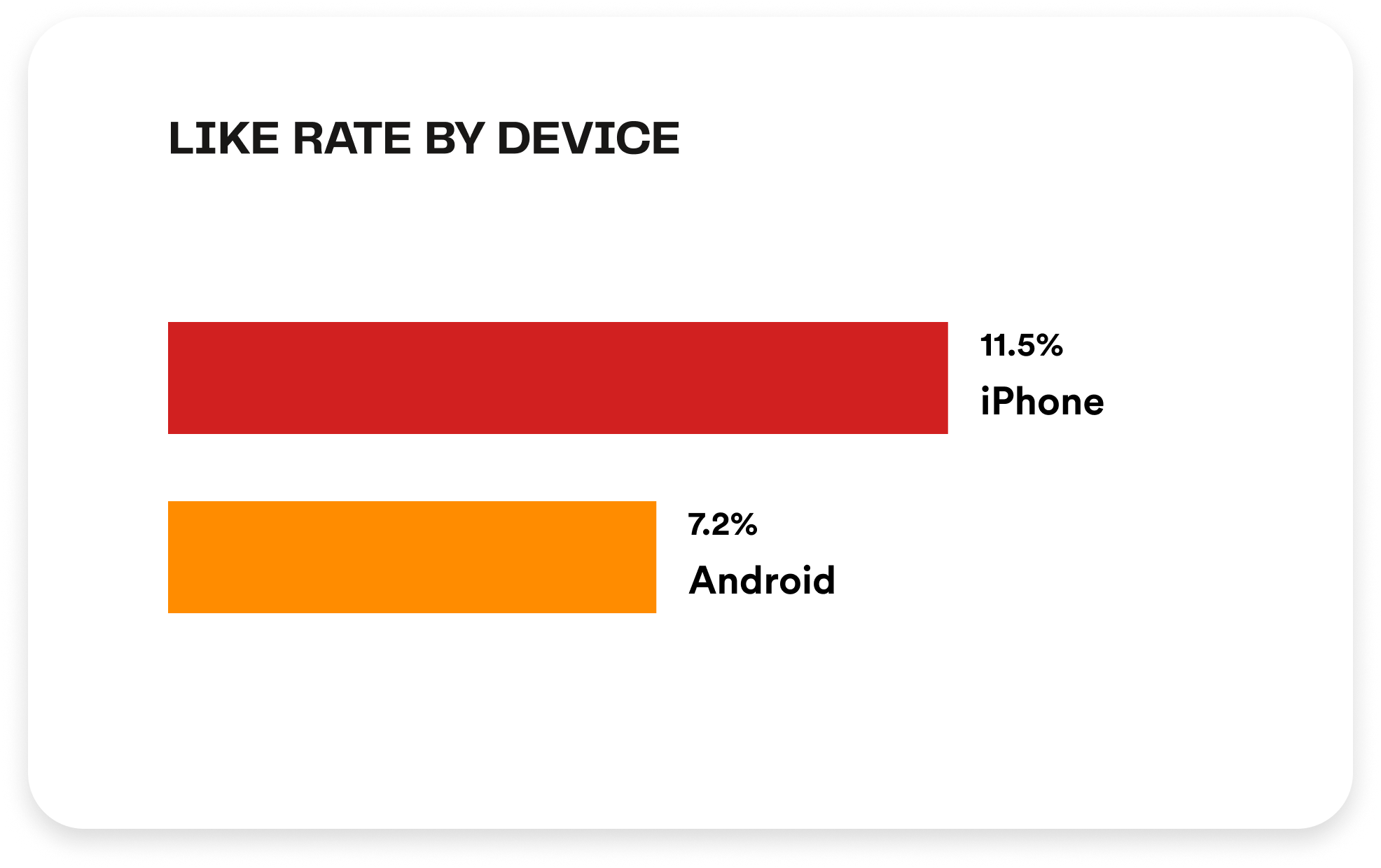
To be clear: this isn't about who sends more likes. It's about who receives them. When someone sees your profile and decides yes or no, your operating system (or whatever it’s correlated with) is apparently part of the equation.
The pattern holds across genders and geography
You might assume this is driven by one gender or one demographic propping up the average. It isn't. The iOS advantage holds across the board.
Here the stats for the US alone, broken down by the gender being liked.
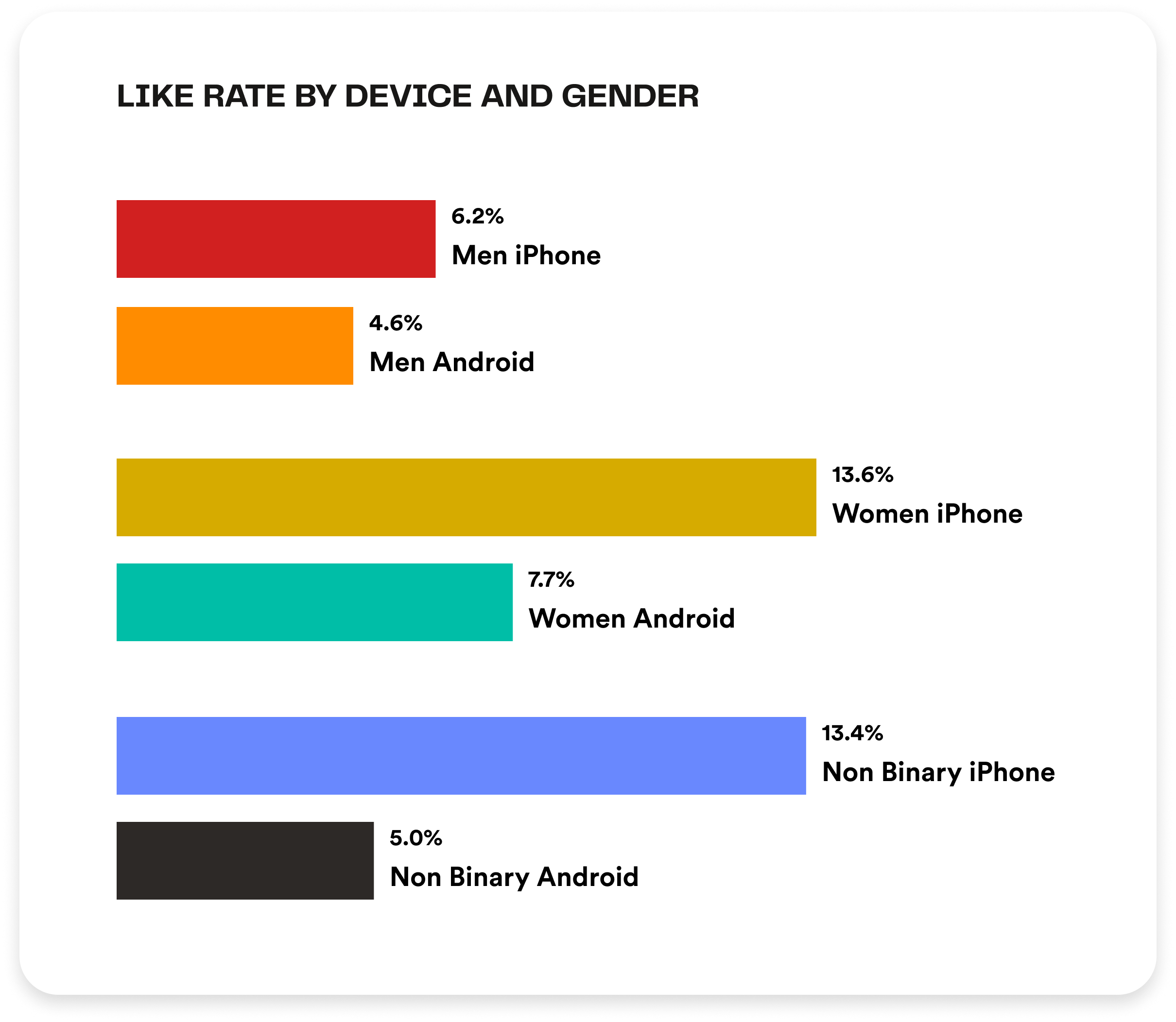
Women on iPhones are liked nearly twice as often as women on Android. For non-binary users, the gap is even wider — iOS users are liked at 2.7x the rate. Men see a smaller but still meaningful boost: about 35% more likes on iOS.
The pattern holds internationally. In Australia, iOS women are liked at 22% versus 5.7% for Android women. In France, it's 13.2% versus 8.9%. In Germany, 11.8% versus 9.6%. In the Netherlands, iOS men are liked at 8.7% versus 2.1% on Android — a 4x difference.
What’s actually going on?
We don't think people are swiping right because they spot an iMessage bubble. Nobody's checking your phone specs before they hit like.
But your phone is a proxy for other things. In many countries, iPhones cost significantly more than the average Android device. That cost signals income, or at least spending habits. And we know from years of dating data (ours and everyone else's) that perceived socioeconomic status affects attractiveness. This isn't a new finding. It's a very old finding wearing a new case.
There's also a subtler possibility: photo quality. iPhone cameras have consistently ranked among the best in smartphones, and better photos mean better first impressions. When your entire dating profile is essentially a photo portfolio, the camera matters. An extra stop of dynamic range won't make you funnier, but it might make your jawline sharper.
The uncomfortable part
This data doesn't tell you to buy an iPhone. (Though if Apple's marketing team is reading this: you're welcome.)
What it tells you is that desirability on dating apps is shaped by signals people aren't even conscious of sending. Your phone, like your height or your neighborhood or your first name, is metadata. And metadata has consequences.
We're still digging into this. We don't have sexuality breakdowns yet, and we want to see how this interacts with age and profile completeness before drawing bigger conclusions. But the top-line finding is hard to argue with: on INNI, the iPhone tax extends to your love life.
Similar articles
MBTI and love
How INNI makes daters less shallow
(How much) does height matter on dating apps?
Download INNI
Connect with people you're compatible with.